The evidence base for natural DHT blockers is real but modest. Here's what peer-reviewed research and clinical trials actually show — without overstating efficacy or pretending there isn't a gap between pharmaceutical and natural options.
Saw Palmetto (Serenoa repens)
Saw palmetto is the most studied natural 5-alpha-reductase inhibitor. The active components are free fatty acids and phytosterols found in the lipophilic berry extract.
Key studies:
- A 2002 study in Journal of Alternative and Complementary Medicine found saw palmetto combined with beta-sitosterol improved hair density and quality ratings in men with androgenetic alopecia over a 5-month period.
- A 2012 randomized, double-blind trial (Evid Based Complement Alternat Med) compared oral saw palmetto to finasteride. Finasteride outperformed (66% of subjects showed improvement vs. 38% for saw palmetto), but saw palmetto showed statistically significant improvement over baseline — confirming clinical effect, not just anecdotal effect.
- A 2020 systematic review concluded saw palmetto has a modest but real effect on hair count and hair density in androgenetic alopecia, with an excellent safety profile.
Beta-Sitosterol
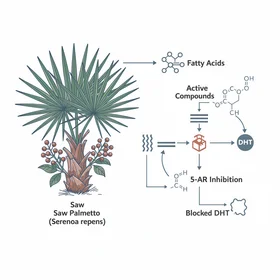
Beta-sitosterol is a plant sterol structurally similar to cholesterol. Its DHT-blocking mechanism involves competitive inhibition at the androgen receptor and possible 5-AR inhibition. The 2002 study cited above specifically tested a saw palmetto + beta-sitosterol combination rather than isolated compounds, suggesting synergistic effect.
Pumpkin Seed Oil
A 2014 randomized, double-blind, placebo-controlled trial published in Evidence-Based Complementary and Alternative Medicine tested pumpkin seed oil (400mg/day) vs. placebo in 76 men with androgenetic alopecia over 24 weeks. Results showed a 40% increase in hair count in the pumpkin seed oil group vs. 10% in placebo — a statistically significant difference. This is one of the better-controlled studies of any natural DHT blocker.
IRB-Approved Clinical Research: Procerin
Procerin is a two-part system combining an oral DHT-blocking supplement (saw palmetto, beta-sitosterol, zinc, vitamin B6, and supporting botanicals) with a topical serum. An IRB-approved double-blind clinical study — the type of oversight that distinguishes real clinical research from company-funded marketing studies — showed that a statistically significant proportion of Procerin users experienced measurable improvement in hair growth compared to placebo. Results were most pronounced in men under 40 in the early stages of androgenetic alopecia.
IRB (Institutional Review Board) approval requires an independent ethics committee to review and approve study design, informed consent procedures, and data handling — the same oversight applied to pharmaceutical trials. This is uncommon for over-the-counter supplement research.
What the Science Does Not Support
No natural DHT blocker has demonstrated the ability to:
- Regrow hair from completely miniaturized (dead) follicles
- Match the DHT suppression levels achieved by finasteride or dutasteride
- Halt hair loss progression with 100% consistency across all users
For a deeper look at the DHT mechanism and how genetic sensitivity determines outcomes, DHT Hair Loss covers the biology in more detail. And for broader context on baldness beyond just DHT — including other causes and the search for a cure — see baldnesscure.org.
How to Start a DHT-Blocking Protocol

Getting started with DHT management doesn't have to be complicated. Here's a step-by-step approach based on clinical best practices:
- Assess your stage of loss. Use the Norwood scale to identify where you are. Early-stage thinning (Norwood I-III) responds best to natural DHT blockers.
- Choose your approach. For early stages, start with a natural DHT blocker like Procerin. For moderate-to-advanced loss, consider prescription options or a combination.
- Establish a daily routine. Consistency is critical — DHT blockers require daily use to maintain follicle-level DHT suppression. Take oral supplements at the same time each day and apply topicals after showering.
- Track your baseline. Take clear photos under consistent lighting before starting. Repeat monthly. Objective comparison matters more than mirror checks.
- Evaluate at 90 days. Most men notice reduced shedding by month 2-3. Visible thickening typically appears at months 4-6. Do not switch products before the 90-day mark.
- Adjust if needed. If results are insufficient after 6 months, consider adding minoxidil or escalating to a prescription-strength option like Procerin Rx.
The Safety Distinction
One reason natural DHT blockers maintain relevance despite lower potency: the side effect profile is dramatically different from finasteride. Reports of sexual dysfunction and persistent hormonal disruption (Post-Finasteride Syndrome) — while affecting a minority of users — represent a meaningful risk for some men. Natural DHT blockers have not been associated with this risk profile, making them a reasonable first-line approach for men who want to address DHT-driven hair loss while avoiding pharmaceutical side effect risk. For a detailed comparison of side effect data across all DHT-blocking compounds, see DHT blocker side effects.