
Natural DHT blockers occupy a specific niche in the hair loss treatment landscape: less potent than finasteride, but with a dramatically better side effect profile. For men in the early stages of thinning who want to address the underlying DHT mechanism without pharmaceutical risk, they represent a legitimate first-line option. Here's what the research actually supports.
Saw Palmetto (Serenoa repens)
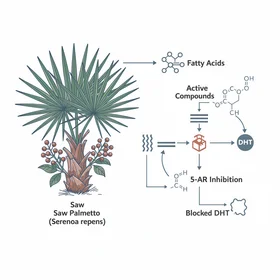
Saw palmetto is the most studied natural 5-alpha-reductase inhibitor for hair loss. The active compounds are liposterolic fatty acids and phytosterols extracted from the berries of the Serenoa repens palm.
The evidence
A 2012 randomized, double-blind trial compared 320mg/day saw palmetto extract to 1mg/day finasteride over 24 months. Results: 38% of the saw palmetto group showed improvement vs. 66% for finasteride. That gap is real, but so is the 38%. Saw palmetto outperformed placebo consistently across multiple studies.
A 2020 systematic review in Complementary Therapies in Medicine concluded that saw palmetto produces "modest but statistically significant" improvements in hair count and density in men with androgenetic alopecia.
How it works
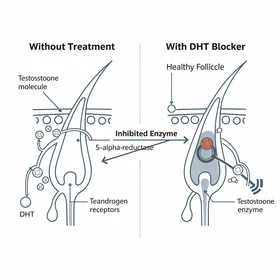
Saw palmetto inhibits both Type 1 and Type 2 5-alpha-reductase isoforms, though less potently than pharmaceutical inhibitors. It may also have anti-inflammatory properties at the follicle level and compete with DHT for androgen receptor binding.
Dosing
320mg/day of a standardized liposterolic extract (containing 85 to 95% fatty acids and sterols) is the clinically studied dose. Lower doses or non-standardized extracts may not deliver sufficient active compounds.
Beta-Sitosterol
Beta-sitosterol is a plant sterol found in saw palmetto, soybeans, wheat germ, and various nuts. It works through competitive inhibition at the androgen receptor and may also inhibit 5-AR activity.
The most relevant hair loss evidence comes from the 2002 study in the Journal of Alternative and Complementary Medicine, which tested a saw palmetto + beta-sitosterol combination and found significant improvement in hair quality ratings over 5 months. Isolating beta-sitosterol's individual contribution is difficult since it's typically studied in combination.
Dosing in clinical contexts ranges from 60mg to 300mg/day, usually as part of a multi-ingredient formula.
Pumpkin Seed Oil
Pumpkin seed oil has one of the strongest individual studies of any natural DHT blocker. A 2014 randomized, double-blind, placebo-controlled trial in Evidence-Based Complementary and Alternative Medicine tested 400mg/day in 76 men with androgenetic alopecia over 24 weeks.
The mechanism is believed to involve 5-alpha-reductase inhibition, though the specific active compounds responsible have not been fully isolated. This is a strong result for a natural intervention, and the zero adverse events profile makes it a low-risk addition to any protocol.
Pygeum Africanum
Pygeum bark extract has a longer history in prostate health than in hair loss. In vitro studies show 5-alpha-reductase inhibition, and its anti-inflammatory properties may benefit scalp health. However, direct clinical evidence for hair regrowth is limited. It's a reasonable supporting ingredient in a multi-compound formula but not a standalone hair loss treatment.
Zinc
Zinc deficiency is associated with hair loss, and zinc plays a role in 5-alpha-reductase activity. Supplementing zinc when deficient can improve hair quality, but mega-dosing zinc in men with normal levels has not been shown to provide additional DHT-blocking benefit and can cause copper depletion at high doses. A sensible dose (15 to 30mg/day) supports the broader protocol without risk.
What Doesn't Work (or Lacks Evidence)

Transparency requires acknowledging the compounds that don't have meaningful evidence for DHT blocking:
- Biotin: Important for hair structure but does not block DHT. Deficiency causes hair loss; supplementation in non-deficient individuals has not been shown to improve hair growth in controlled trials.
- Green tea extract (EGCG): Some in vitro 5-AR inhibition has been observed, but no clinical hair loss trials demonstrate meaningful effect at supplemental doses.
- Stinging nettle root: Frequently included in "DHT blocker" supplements. Has theoretical mechanisms but no published clinical evidence specifically for androgenetic alopecia.
Combination Formulas: Why They Matter
Individual natural compounds produce modest effects. The clinical evidence suggests that combinations outperform single ingredients, likely because they address DHT through multiple pathways simultaneously: 5-AR inhibition (saw palmetto), receptor competition (beta-sitosterol), direct follicle stimulation (pumpkin seed oil), and anti-inflammatory support (pygeum).
This is the logic behind multi-ingredient formulas like Procerin, which combines saw palmetto, beta-sitosterol, zinc, vitamin B6, and supporting botanicals into a single protocol. Procerin's IRB-approved clinical study tested the combination, not isolated ingredients, and showed statistically significant improvement over placebo. That study design, uncommon for supplements, is a meaningful differentiator from products relying on ingredient-level evidence alone.
Setting Realistic Expectations
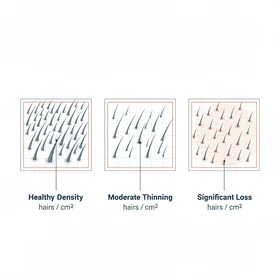
Natural DHT blockers are not finasteride. They produce real but more gradual results, work best in early-stage thinning (Norwood I to III), and require 6 to 12 months of consistent use before meaningful assessment. For men with aggressive, rapidly progressing loss, they may not be sufficient as a standalone approach.
But for the significant number of men who want to address the hormonal mechanism of their hair loss without the side effect risk of pharmaceuticals, natural DHT blockers are a clinically supported starting point, not a placebo category.
For men who want topical support in addition to an oral protocol, adding a ketoconazole-based DHT blocker shampoo addresses the problem from both internal and external directions.